 Civil Resilience
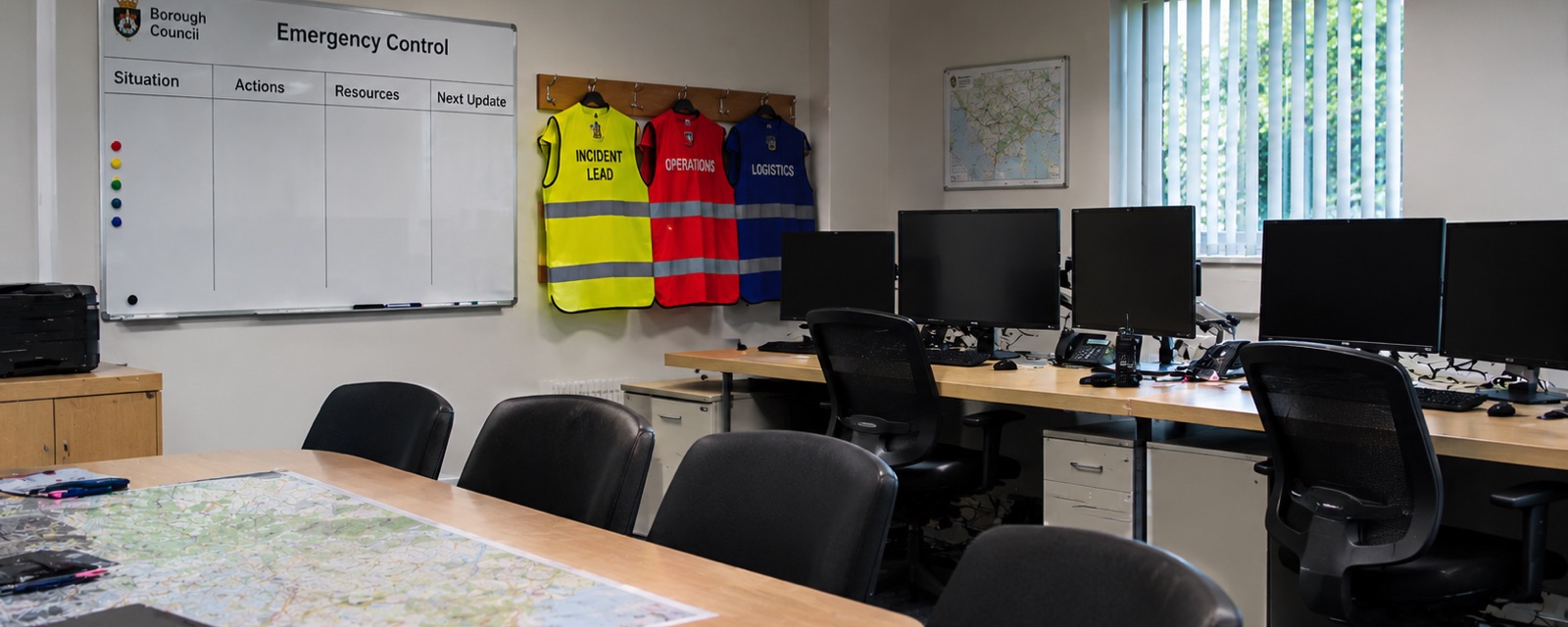
Emergency
- The law
Section 1(1) of the Civil Contingencies Act 2004 defines an emergency, for Part 1 of the Act, as "an event or situation which threatens serious damage to human welfare in a place in the United Kingdom", "an event or situation which threatens serious damage to the environment of a place in the United Kingdom", or "war, or terrorism, which threatens serious damage to the security of the United Kingdom".
Section 1(2) narrows the first limb. An event or situation threatens damage to human welfare only if it involves, causes or may cause loss of human life, human illness or injury, homelessness, damage to property, disruption of a supply of money, food, water, energy or fuel, disruption of a system of communication, disruption of facilities for transport, or disruption of services relating to health.
Section 1(3) narrows the second limb. Damage to the environment means contamination of land, water or air with biological, chemical or radio-active matter, or disruption or destruction of plant life or animal life. Section 1(5) adds that the event or situation may occur or be inside or outside the United Kingdom. Section 19 gives a parallel definition for the emergency powers in Part 2, framed by reference to the United Kingdom or a Part or region rather than "a place".
In practice
A flood, a pandemic, a national power failure or a terrorist attack each fit the definition; a disruption that threatens none of the listed kinds of harm does not.
Last updated 29 October 2026. Reviewed 29 October 2026