 Civil Resilience
Food
Three days of food that needs no fridge and no cooking, why cooking is the thing that fails, and what to do with the food already in the fridge and freezer.
- Essentials
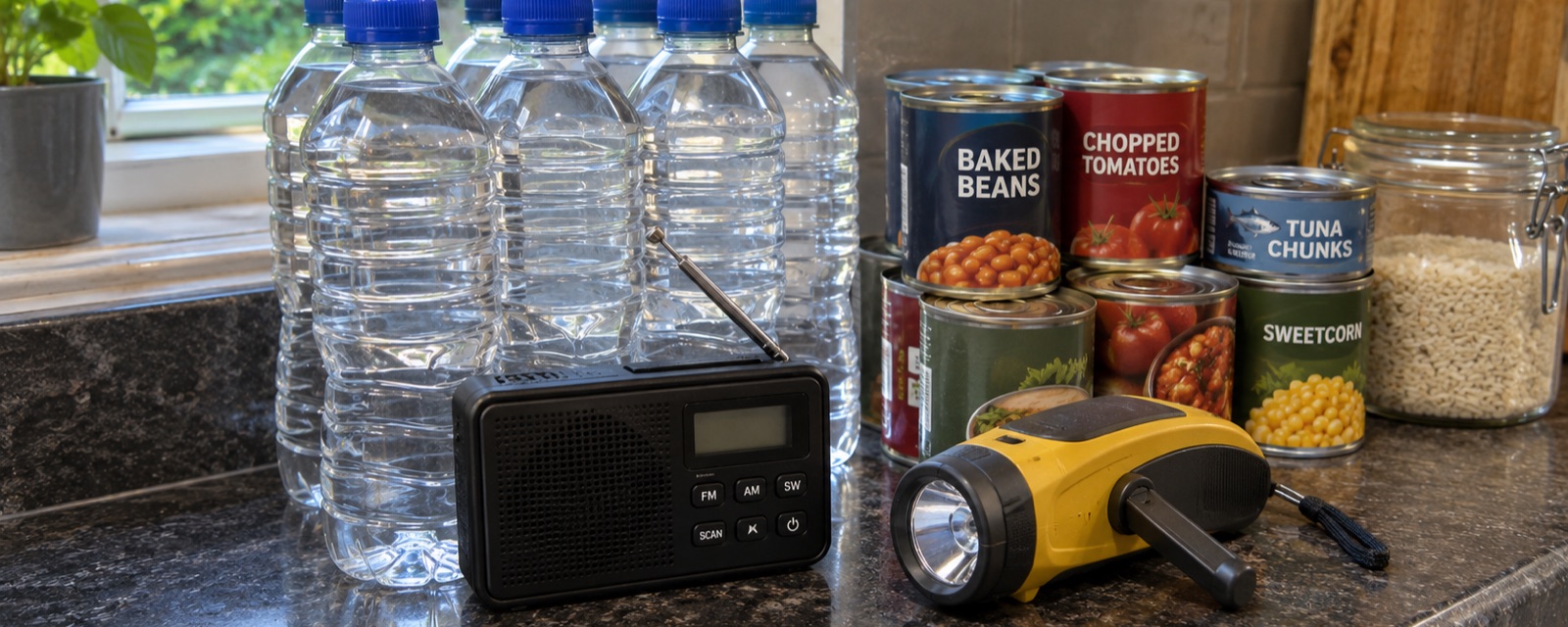
The Be Ready checklist asks for non-perishable food for three days: food with a long shelf life that does not need refrigeration or cooking. The examples given are tinned meat, fish or vegetables, dried fruit and nuts. The one piece of shopping advice is to buy food you would usually eat.
Why no cooking
Be Ready's power cuts page lists what stops working without electricity: gas ovens, boilers, heat pumps and the home internet. The power cuts page repeats the food advice with one practical addition, a tin opener, and gives ready-to-eat tinned meat, fruit or vegetables as its examples. It also says to include ready-made baby formula and pet food if the household needs them. See children, older people and pets for the baby formula advice in full.
Be Ready does not set a quantity beyond three days, and this page does not either.
Building the store
Be Ready's getting-started steps apply directly to food:
- Check the cupboards first to see what you already keep.
- Note what is still needed, remembering anything the household relies on.
- Pick up missing items during regular shopping trips to spread the cost.
- Set a reminder every six months to check expiry dates and swap out items.
If you end up with extra items, Be Ready suggests donating them to people who do not have the means to prepare their own household.
Food already in the fridge and freezer
During a power cut, keep the fridge and freezer doors closed. Be Ready says this keeps them cold for several hours. The Food Standards Agency publishes advice on food safety in a power cut at https://www.food.gov.uk/safety-hygiene/food-safety-in-a-power-cut-advice-for-consumers, and the government's home food fact checker answers common food safety questions at https://www.gov.uk/government/publications/home-food-fact-checker/home-food-fact-checker.
Food and water together
Food preparation is one of the uses of water that Be Ready lists for a water outage, alongside drinking and washing hands. While the mains is off, bottled water should be kept for those three uses only. The water page covers how much to keep and what to do when the supply is interrupted.
Cold weather
Be Ready's cold weather page asks you to plan ahead and check you have enough food and medication in case it is harder than usual to leave the house. It suggests thinking about who could pick up food and medication on your behalf if you could not go out, and letting them know in advance that you might need them. The same page asks you to check on family, friends and neighbours who may be at higher risk, and to offer practical help such as getting food or medication if you can.
The official list
The one-page Be Ready checklist, including the food line, is at https://beready.campaign.gov.uk/wp-content/uploads/sites/252/2026/10/Be-Ready-Checklist_English.pdf.
Checklist
- Non-perishable food for three days
- Food with a long shelf life that needs no refrigeration and no cooking, such as tinned meat, fish or vegetables, dried fruit and nuts
- A tin opener
- Food you would usually eat
- Ready-made baby formula if needed
- Pet food
- Enough food in the house before a cold spell makes it harder to go out
- Check expiry dates every six months
Sources
- beready.campaign.gov.uk/be-ready-for-emergencies
- beready.campaign.gov.uk/wp-content/uploads/sites/252/2026/10/Be-Ready-Checklist_English.pdf
- beready.campaign.gov.uk/be-informed-about-hazards/power-cuts
- beready.campaign.gov.uk/be-informed-about-hazards/cold-weather-snow-ice
- beready.campaign.gov.uk/be-informed-about-hazards/water-supply-interruptions-or-outages
Last updated 29 October 2026. Reviewed 29 October 2026