 Civil Resilience
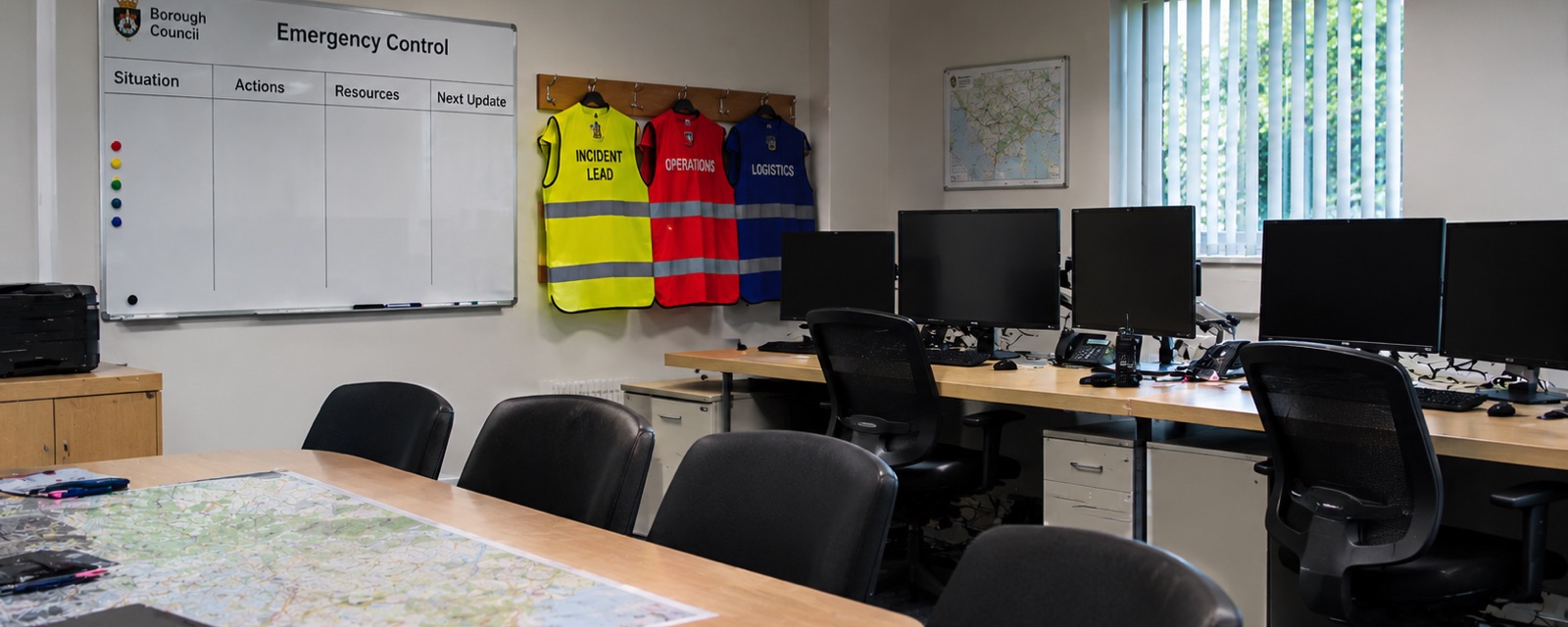
Local resilience forums
What a local resilience forum is under the 2005 Regulations, who sits on it, what it must produce, how many there are, and what central government is changing around them.
- Local
A local resilience forum is where the bodies that must prepare for emergencies in an area meet to do it together. Cabinet Office guidance calls the forum the principal mechanism for multi-agency co-operation at the local level. This page explains where it comes from in law, who sits on it, and how many there are.
Where the forum comes from
Regulation 4(1) of the Contingency Planning Regulations 2005 requires the Category 1 responders with functions in a local resilience area in England or Wales to co-operate with each other in performing their duties under section 2(1) of the Civil Contingencies Act 2004. Regulation 4(2)(b) says that co-operation must take the form of all those responders co-operating together in a single forum. Regulation 4(3) says that form of co-operation is referred to as the "local resilience forum".
The wording matters. The Regulations describe the forum as a way responders co-operate, not as an organisation with its own legal duties. Every duty under the Act stays with the individual responder. The forum is the room in which the responders discharge the duties that need a joint approach.
The area a forum covers
Regulation 3 defines the local resilience area. Outside London it is the police area in which the responder's functions are exercisable. In London the Schedule to the Regulations groups the boroughs into areas, and the Common Council of the City of London has its own. The gov.uk contacts page confirms that the forums' areas are based on police areas.
Who sits on it
The gov.uk contacts page describes forums as multi-agency partnerships made up of representatives from local public services, including the emergency services, local authorities, the NHS, the Environment Agency and others, the Category 1 responders. Forums are supported by Category 2 responders, such as the highways body and public utility companies, which have a responsibility to co-operate and to share relevant information. Forums also work with partners in the military and voluntary sectors.
Regulation 4(4) requires the Category 1 responders to arrange a forum meeting at least once every six months and, so far as reasonably practicable, to attend or be effectively represented.
What a forum must produce
Regulation 15 requires the Category 1 responders, as part of the forum, to co-operate in maintaining a community risk register. Regulation 16 requires copies to be shared with neighbouring areas and, in England, with the Secretary of State, or in Wales with the National Assembly for Wales, as the Regulations name it. The gov.uk contacts page says forums aim to plan and prepare for localised incidents and catastrophic emergencies, identifying risks and producing emergency plans to prevent or reduce the impact of any incident on their communities.
How many there are
The Be Ready website, published by the Cabinet Office, gives the count: 38 local resilience forums in England, four in Wales, three Regional Resilience Partnerships in Scotland and three Emergency Preparedness Groups in Northern Ireland. The 38 and the four match the entries on the gov.uk contacts page, which lists England by region and Wales as Dyfed Powys, Gwent, North Wales and South Wales. Scotland and Northern Ireland are described on the Scotland, Wales and Northern Ireland page.
Each entry on the gov.uk page, last updated 11 February 2026, gives the forum's secretariat, a website where one exists, and a link to its community risk register.
What is changing
The UK Government Resilience Action Plan 2026 Implementation Report records several changes in England. A Stronger LRF Trailblazer programme is running in Northumbria, Cumbria, Greater Manchester, Suffolk and London, with £3.5 million of funding for 2026/27, and five Chief Resilience Officers have been introduced. A peer review model for forums, responding to a Grenfell Tower Inquiry recommendation, was piloted in spring 2026 with full launch planned for autumn 2026. Updated National Resilience Standards for forums are due in autumn 2026, and a Local Capabilities Assessment has tested forums' preparedness across capabilities from evacuation and shelter to flood response.
Key points
- There are 38 local resilience forums in England and 4 in Wales. Scotland has 3 Regional Resilience Partnerships and Northern Ireland has 3 Emergency Preparedness Groups.
- Regulation 4(2)(b) of the 2005 Regulations requires all the Category 1 responders in a local resilience area to co-operate in a single forum. Regulation 4(3) names that forum the local resilience forum.
- The Regulations describe the forum as a form of co-operation between responders, not as a body with duties of its own. The duties stay with each responder.
- Local resilience areas follow police areas, with London divided into areas set out in the Schedule to the Regulations.
Sources
- www.gov.uk/guidance/local-resilience-forums-contact-details
- www.legislation.gov.uk/uksi/2005/2042/made
- www.gov.uk/guidance/preparation-and-planning-for-emergencies-responsibilities-of-responder-agencies-and-others
- beready.campaign.gov.uk/about-this-website-and-uk-resilience
- www.gov.uk/government/publications/the-uk-government-resilience-action-plan-2026-implementation-report/the-uk-government-resilience-action-plan-2026-implementation-report-html
Last updated 29 October 2026. Reviewed 29 October 2026